

- This event has passed.
Creating a Nest of Care Cohort: Foundational Training on Perinatal Loss for Birthworkers
~REGISTRATION FULL~
This training centers, and is free for, BIPOC birth workers in King County, WA. If you are neither, please complete the survey for more information about sliding scale options.
This birth worker training centers on the loss of life when intertwined with the womb and birthing. Join 30 local birth workers in a nine-month commitment to growing the web of care necessary to support someone through this loss. The Creating a Nest of Care (NOC) series begins with a 3-day foundational training designed to prepare birthworkers to compassionately support families experiencing perinatal and infant loss. This training introduces attendees to the emotional, physiological, and social dimensions of pregnancy and infant loss while exploring the unique role birthworkers play in holding space for grieving families. Through guided discussion, case examples, reflective practice, and skill-building exercises, participants will learn practical approaches for communicating with grieving families, honoring the baby’s life, supporting memory-making rituals, and navigating memorial arrangements and community resources. The training also emphasizes ethical considerations, scope of practice, and provider sustainability by addressing the emotional impact of loss work and strategies for self-care. Participants will leave with foundational knowledge, practical tools, language, and frameworks that can be integrated into birthwork practice to support grieving families with compassion, respect, and cultural humility.
The Foundational Training is followed by monthly ongoing sessions (May-Dec) on specific topics related to perinatal and infant loss. Register for those separately Here
“Birthworkers” are defined as those who are helpers/providers/carers working with people during the childbearing period. They include, but are not limited to: doulas, peers, WIC counselors, case managers, nurses, home visitors, perinatal mental health providers, etc.
Creating a Nest Cohort is a 9-month project provided for free in partnership with Imani’s Light and Perinatal Support WA for BIPOC birthworkers serving families in King County. Please note this training is free for BIPOC King County birth workers. If you are neither, please complete the survey for more information about sliding scale options.
Dates and Times:
April 22nd – 24th, 2026
April 22nd Community Dinner (4pm-8pm)
April 23rd – 24th Foundational Training (10am-4pm)
Location: In-Person; due to the nature of the content and curriculum, all of the 3 Day Foundational sessions necessitate in-person attendance. The experiential learning and community building fostered in this space are not replicable in a virtual format (for monthly consult sessions 1, 6, and 7 hybrid options will be a permissible accommodation for health reasons only, not convenience).
Casey Family Programs
1123 23rd Avenue Seattle, WA 98122
Learning Objectives:
- By the end of the training, participants will be able to identify at least three different types of perinatal or infant loss and describe two common emotional or physical experiences associated with each.
- By the conclusion of the training, participants will demonstrate the ability to apply at least three trauma-informed communication strategies when supporting families experiencing perinatal or infant loss through guided role-play or case discussion.
- By the end of the training, participants will be able to describe at least two memory-making or ritual practices that can support grieving families and explain how these practices may be adapted to align with a family’s cultural or personal values.
- By the completion of the workshop, participants will create a brief personal provider care plan that includes at least two strategies for managing emotional impact and preventing burnout while providing bereavement support.
Continuing Education Units:
- 13 CEUs approved for LICSW, LMHC, LMFT.
- This Program has been approved for 13 CEUs for Licensed Social Workers, Mental Health Counselors and Marriage and Family Therapists by the Washington State Society for Clinical Social Work.
- 13 Contact Hours approved for RNs: Provider approved by the California Board of Registered Nursing, Provider Number 17084 for 13 contact hours.
About the Trainers:
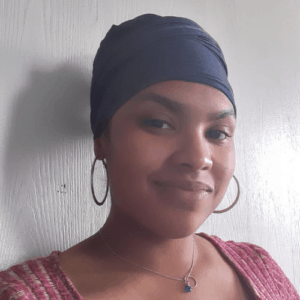 La Tonia Bussell-Packard (they/she), Parent Resilience Specialist, Traditional Midwife is a queer Black femme who supports pregnant and parenting families as a Parent Resilience Specialist in King County. They serve as an encouraging resource and witness for parents navigating the perinatal mental health landscape by using their firsthand experience as a parent who has lived with anxiety and depression. La Tonia knows firsthand the barriers that exist for Black and queer folx seeking support for their mental health. La Tonia has experienced personal and professional loss, which allows them to offer supportive tools and skills that are based on lived experience and shared community ways of ‘knowing’ and processing grief and loss.
La Tonia has spent the last 7+ years advocating for families, attending births, and providing compassionate care as a birth doula and student midwife. They graduated from midwifery school in June 2021 and now practice and attend births as a traditional midwife. In all their work, La Tonia centers Black, Indigenous, and QTPOC families in their role as a midwife, doula, and peer. They use the framework and lens of reproductive justice, the intersections of race, class, gender/sexuality, and ability, and radical rest politics when supporting families in their community.
 Marquita Straus, MSW, LICSW is a Perinatal Grief & Trauma Therapist, Death Doula, and founder of Imani’s Light Grief & Wellness Center. Marquita has over 15 years of serving BIPOC families. She has served as a full spectrum doula (birth, postpartum, and bereavement), breastfeeding peer counselor, childbirth educator, perinatal bereavement group facilitator, and is a trained midwife. She aims to inspire and empower people to show up authentically, while fiercely advocating for those navigating spaces that are not traditionally occupied by people of color.

