
Father’s Day Reflections from the Warm Line
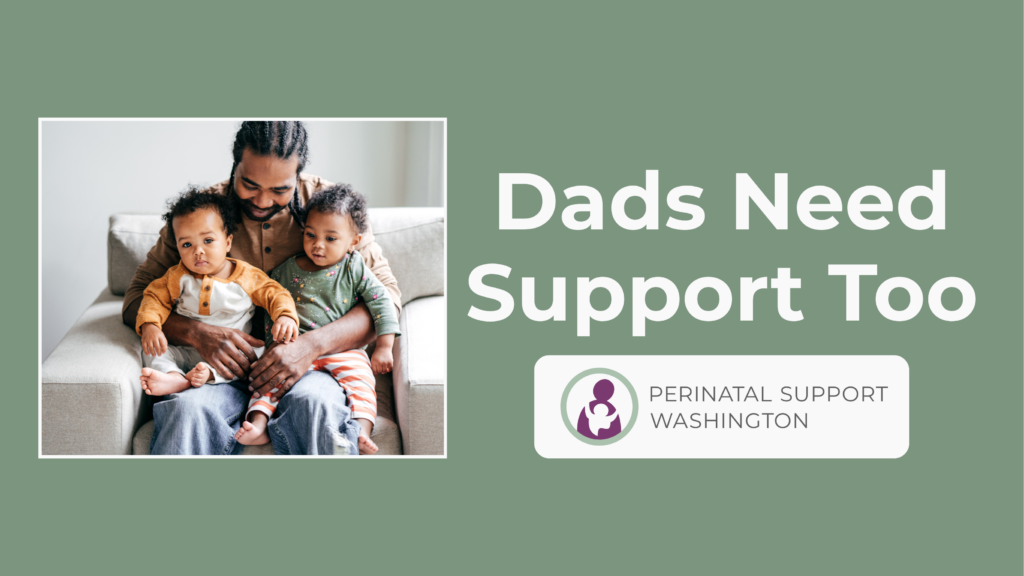
By Darryl Laferte
My engagement with Perinatal Support Washington (PS-WA) as a University of Washington MSW intern was driven by a desire to deepen the practical application of the social work principles I’m learning about in the classroom within the specialized field of perinatal mental health. I chose this internship to gain firsthand experience in systemic approaches to supporting vulnerable families, particularly through the unique lens of peer support; I’ve long been drawn to supporting young families (volunteering at Parent Trust for Washington Children in various capacities since 1997) and have personally benefited from peer support and continue to be awed by its efficacy. My goal was to move from identifying resources to active intervention, providing “experience, strength, and hope” to parents who might otherwise feel adrift in their struggles.
When “dads” (non-birthing parents) call the Warm Line, common themes frequently emerge, most notably a profound sense of overwhelm and isolation; by extension, it is understandable that they imagine their struggles are unique and reveal deep personal shortcomings. I have worked with fathers navigating high-stakes scenarios, including NICU trauma, relationship crises, and substance use disorder recovery–many of whom reported having no one else to talk with to process their experience. Many dads share that they were unprepared for “how hard it really is” and report feeling “invisible”, “unnecessary”, or otherwise irrelevant during the immediate postpartum period, which can cause them to withdraw further from their partners and babies.
These challenges are typically exacerbated by societal pressures that expect men to be stoic, “big and strong” models of toughness who take care of everything without asking for help. These expectations make it difficult for fathers to admit–even to themselves–that they are struggling; they fear appearing weak and discount their feelings and experiences as trivial compared to those of the birthing parent. In the PS-WA Dads Support Group, I’ve observed that many fathers are initially skeptical of “men’s groups” due to assumptions that such spaces will either be toxic or hostile to emotions, or that an emotionally safe space will be wildly uncomfortable and ineffective, based on experience or inexperience, respectively. Non-judgmental peer support groups that normalize and validate their experiences are vital for their mental well-being, and the rapid transformations that consistently take place in those environments are deeply gratifying to witness.
The advice I would give to expectant fathers is to remember that it is okay to love being a father while simultaneously disliking aspects of fatherhood. Giving yourself grace and reducing the guilt you feel for not loving “every part of the journey” can be transformative for your mental health. And you deserve mental health! I encourage you to seek out peer support and community early (the PS-WA Dads Support Group is a great place to start!), as hearing other fathers share similar struggles is often the best “antidote to the separation and loneliness” that can accompany new parenthood, however unlikely that might seem on the surface. Finally, don’t be afraid to advocate for yourself and share your feelings without the need to justify them; taking care of yourself is the best thing you can do for your family, and it makes sense that we need some guidance on how to do that within a society that has been telling us our whole lives that we have to model unflinching confidence and competency in all things, without assistance. Lastly, I never hesitate to encourage every expectant father in Washington State to avail themselves of the “Conscious Fathering” class offered both in-person and online: https://www.parenttrust.org/baby-care-individual-classes/conscious-fathering/ – I took it on a whim and it was the best prep I could have done. Then come join PS-WA’s Dads Support group at https://perinatalsupport.org/series/ps-wa-support-group-for-dads/ for ongoing support! Feeling connected, involved, and validated in your parenting journey is priceless, and requisite for raising emotionally healthy kids.